





 Send Inquiry
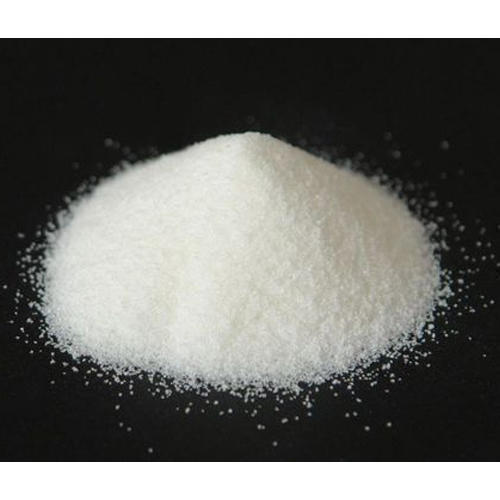
Polyelectrolytes
Price 190 INR/
Polyelectrolytes Specification
- HS Code
- 39069090
- Purity
- 100%
- Solubility
- water soluble
- Melting Point
- 84 DEGREE
- Smell
- Other
- Poisonous
- Yes
- Form
- Liquid
- Boiling point
- 200 Degree
- Storage
- Dry Place
- Structural Formula
- (C3H5NO)n
- Ph Level
- 6-7Ph
- Other Names
- Polyelectrolyte chemical, polyelectrolyte powder
- Molecular Formula
- (C3H5NO)n
- Taste
- Other
- Classification
- Inorganic Chemicals
- Chemical Name
- Polyelectrolyte chemical
- CAS No
- 9003058
- Grade
- Industrial Grade
- Standard
- Industrial Standard
- Type
- POWDER
- Usage
- For cleaning waste water treatment plant
- Main Material
- Polyacrylamide
- Application
- Nuclear, Paper, Oil Industry, Industrial, medicine, Explosive, Lubricants, Metal, Toothpastes, Textile Industry, Organic Synthesis, Plastic, Fertilizer, Rubber, Pharmaceutical, Water Treatment, Paints, Printing Industry
Polyelectrolytes Trade Information
- Minimum Order Quantity
- 50
- FOB Port
- GUJARAT AND MAHARASHTRA
- Payment Terms
- Cash in Advance (CID), Cheque
- Supply Ability
- 10000 Per Day
- Delivery Time
- 2 Days
- Sample Available
- Yes
- Sample Policy
- Free samples are available
- Packaging Details
- 25 KG Bag
- Main Export Market(s)
- Asia, Africa, Australia, Central America, North America, South America, Eastern Europe, Western Europe, Middle East
- Main Domestic Market
- North India, East India, Gujarat, Bihar, Chandigarh, Daman and Diu, Goa, Assam, Delhi, Himachal Pradesh, Jammu and Kashmir, All India, South India, Central India, West India, Karnataka, Kerala, Lakshadweep, Mizoram, Meghalaya, Manipur, Andhra Pradesh, Jharkhand, Odisha, Punjab, Dadra and Nagar Haveli, Andaman and Nicobar Islands, Arunachal Pradesh, Chhattisgarh, Haryana, Madhya Pradesh, Maharashtra, Nagaland, Rajasthan, Sikkim, Tamil Nadu, Telangana, Tripura, Pondicherry, Uttar Pradesh, Uttarakhand, West Bengal
- Certifications
- ISO 9001 : 2015 certified and Msme Certified.
Polyelectrolytes About
Polyelectrolytes
Polyelectrolytes are incredibly versatile molecules that can revolutionize various industries, from water treatment to cosmetics. Their unique ability to attract and retain water makes them perfect for applications like hydration, thickening, and stabilization. Plus, their ionic properties allow them to interact with other molecules in fascinating ways, enabling advanced technologies like drug delivery and gene therapy.
Here are Some FAQs about polyelectrolytes:
1. Q: What is a polyelectrolyte?
A: A polyelectrolyte is a type of polymer that contains repeating units with charged groups.
2. Q: What are the types of polyelectrolytes?
A: There are two main types: polycations (positively charged) and polyanions (negatively charged).
3. Q: What are polyelectrolytes used for?
A: They have various applications, including water treatment, cosmetics, pharmaceuticals, and food processing.
4. Q: How do polyelectrolytes work?
A: They interact with other molecules through electrostatic forces, allowing them to attract, repel, or bind to other substances.
5. Q: Are polyelectrolytes safe?
A: Generally, yes. However, their safety depends on the specific application, concentration, and type of polyelectrolyte.
6. Q: Can polyelectrolytes be biodegradable?
A: Yes, some polyelectrolytes are biodegradable, making them more environmentally friendly.
7. Q: How are polyelectrolytes synthesized?
A: They can be synthesized through various chemical reactions, such as polymerization or copolymerization.
8. Q: What is the difference between polyelectrolytes and electrolytes?
A: Polyelectrolytes are large molecules with charged groups, while electrolytes are small molecules that dissociate into ions in solution.
9. Q: Can polyelectrolytes be used in drug delivery?
A: Yes, polyelectrolytes can be used to create drug delivery systems that target specific cells or tissues.
10. Q: Are polyelectrolytes expensive?
A: The cost of polyelectrolytes varies depending on the type, quality, and application. Some polyelectrolytes can be relatively inexpensive, while others may be more costly.

Price:
- 50
- 100
- 200
- 250
- 500
- 1000+

More Products in Polyelectrolyte Chemicals Category
Polyelectrolyte Chemical Powder
Price 260 INR
Minimum Order Quantity : 500
CAS No : 9003058
Storage : Dry Place
Form : Powder
Usage : WATER AND WASTE WATER

Anionic Polyelectrolyte Powder
Price 165.00 INR / Kilograms
Minimum Order Quantity : 200 Kilograms, Kilograms
CAS No : 9003058
Storage : Dry Place
Form : Powder, Powder
Usage : Clean water in industrial plants

Anionic Polyelectrolyte
Price 165.0 INR / Kilograms
Minimum Order Quantity : 100 Kilograms
CAS No : 5000382
Storage : Dry Place
Form : Powder
Usage : Used to clean water , Water Treatment plant , waste water chemicals
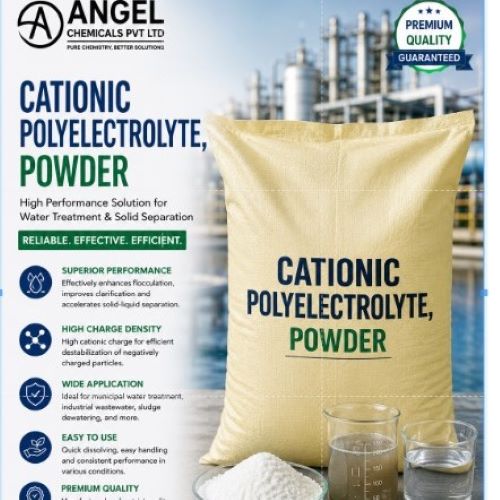
Polyelectrolyte Cationic Powder
Price 260.00 INR / Kilograms
Minimum Order Quantity : 100 Kilograms
CAS No : 2037509
Storage : Room Temperature
Form : Powder
Usage : To treat waste water

GST : 24AAVCA9917G1Z7

- AATMIYA BROOKFIELDZ, 29, UNTIYA, KAJAPUR, UNTIYA KAJAPUR,Vadodara - 391243, Gujarat, India
- Phone :08045478213

- Mr. Nitin (Director)
- Mobile :08045478213
- Send Inquiry
 Send Inquiry

|


 Send Inquiry
 Send SMS
 Call Me Free
Developed and Managed by Infocom Network Private Limited.

