




Phone Number08045478213

 Send Inquiry
PH Paper
Price 190 INR/ Pack
MOQ : 20 Packs, Pack
PH Paper Specification
- Storage Instructions
- Store in a dry and cool place
- Ph Level
- Range 1-14
- Shelf Life
- 2 \\ Years
- Packaging Type
- Box
- Usage
- Laboratory, Educational, Research
- Size
- Approx. 6x0.5 cm strip
- Physical State
- Solid
- Grade
- Industrial
- Type
- PH Paper
- Application
- Measurement of pH levels
- Appearance
- Strip form
- Material
- Cellulose Paper
- Color Change Range
- 1 (red) to 14 (dark blue)
- No. of Strips per Pack
- 100 strips
- Disposal
- Non-hazardous waste
- Indicator Sensitivity
- Sensitive to pH scale
- Compatibility
- Suitable for aqueous solutions measurement
PH Paper Trade Information
- Minimum Order Quantity
- 20 Packs, Pack
- Supply Ability
- 10 Packs, Pack Per Day
- Delivery Time
- 10 Days
- Main Domestic Market
- All India, Madhya Pradesh, Meghalaya, Sikkim, Delhi, Daman and Diu, Gujarat, South India, Karnataka, Tripura, Pondicherry, North India, Arunachal Pradesh, Assam, Rajasthan, Mizoram, Himachal Pradesh, Chhattisgarh, Chandigarh, Jharkhand, Dadra and Nagar Haveli, West India, Haryana, Uttar Pradesh, Maharashtra, Lakshadweep, Goa, Telangana, Jammu and Kashmir, West Bengal, Uttarakhand, Odisha, Bihar, Nagaland, Andaman and Nicobar Islands, Punjab, Andhra Pradesh, Manipur, , Central India, East India, Kerala, Tamil Nadu
- Certifications
- ISO 9001 : 2015 certified and Msme Certified.
PH Paper About
PH Paper, also known as litmus paper, is a type of paper that is used to test the acidity or alkalinity of a liquid. It is made by impregnating paper with a mixture of different dyes that change color in response to changes in pH. When pH paper is dipped into a solution, it reacts with the hydrogen ions in the solution, causing the dye to change color.
The color change is then compared to a color chart or pH scale to determine the approximate pH of the solution. pH paper is a simple, inexpensive, and convenient tool for measuring the pH of a solution. It is often used in laboratories, schools, and in-home testing kits. However, it is less accurate than a pH meter, and it can only provide an approximate pH value within a certain range, typically between 0 and 14. Different pH paper types may have different pH ranges, so its important to choose the appropriate type of pH paper for the specific application.
Features of pH paper:
1. pH range: Different types of pH paper have different pH ranges, which can vary from narrow to wide. Its important to choose the appropriate pH paper for the specific application.
2. Color chart: pH paper typically comes with a color chart or pH scale that helps to interpret the color change and determine the approximate pH value of the solution.
3. Sensitivity: The sensitivity of pH paper refers to how easily it detects changes in pH. pH paper with high sensitivity can detect small changes in pH, while pH paper with low sensitivity is less responsive.
4. Convenience: pH paper is often convenient to use because it is portable, disposable, and requires no additional equipment or calibration.
5. Cost-effective: pH paper is a cost-effective way to test pH and is often less expensive than a pH meter.
6. Shelf life: pH paper has a limited shelf life and can become less accurate over time if not stored properly. Its important to check the expiration date and store pH paper in a cool, dry place.
7. Safety: pH paper is generally safe to use and does not pose a significant risk of exposure to chemicals. However, its important to follow safety guidelines and use protective equipment when handling potentially hazardous chemicals.
Specifications ofPH Paper:
- Type: Paper
- Measuring Range: Ph 0 To 14
- Material: Paper
- Color: Multi Colours
- Number Of Leaves: 10
- Ph Value: 0 To 14
FAQs ofPH Paper:
Q: What is the pH range of pH paper?
A: The pH range of pH paper can vary depending on the type of paper. Some pH papers have a narrow pH range, while others have a wider range. The pH range is typically indicated on the packaging or instructions.
Q: How do I use pH paper?
A: To use pH paper, dip a small piece of the paper into the solution being tested and compare the color change to the color chart provided. The color of the paper will correspond to a certain pH value, which can be determined from the color chart.
Q: How accurate is pH paper compared to a pH meter?
A: pH paper is generally less accurate than a pH meter. While pH paper can provide an approximate pH value, it is less precise than a pH meter and can be affected by factors such as temperature and the presence of other chemicals.
Q: Can pH paper be reused?
A: No, pH paper is a one-time use product and cannot be reused.
Q: What is the shelf life of pH paper?
A: pH paper has a limited shelf life and can become less accurate over time. The shelf life can vary depending on the type and brand of pH paper, but it is typically indicated on the packaging or instructions.
Q: Is pH paper safe to use?
A: pH paper is generally safe to use and does not pose a significant risk of exposure to chemicals. However, its important to follow safety guidelines and use protective equipment when handling potentially hazardous chemicals.
Q: What are some common applications of pH paper?
A: pH paper is commonly used in laboratories, schools, and in-home testing kits to test the pH of various solutions. It is also used in the food industry to test the acidity of foods and in swimming pools to test the pH of the water.
Instant and Accurate pH Assessment
Engineered for high sensitivity, these pH paper strips provide immediate color change to accurately indicate the pH of aqueous solutions. Ranging from red at pH 1 to dark blue at pH 14, each strip simplifies the measurement process for both routine lab tests and educational demonstrations.
Ease of Use and Versatile Application
Designed in strip form and packed in user-friendly boxes, these cellulose pH indicators are suitable for laboratories, schools, and research centers. Their compatibility with all aqueous solutions makes them a practical solution for a wide range of pH testing needs.
Reliable Shelf Life and Safe Disposal
Each box of pH strips remains effective for up to 2 years when stored in a cool, dry place. Made from cellulose paper, the strips are categorized as non-hazardous waste, ensuring safe disposal after use while maintaining laboratory safety standards.
FAQs of PH Paper:
Q: How do I properly use the pH paper strips for measurement?
A: To measure pH, immerse one end of the strip in the aqueous solution for a few seconds. Remove and compare the resulting color with the provided reference chart to determine the pH value.Q: What benefits does this pH paper offer over other types of indicators?
A: This pH paper provides instant results, covers the entire pH range from 1 to 14, and boasts high sensitivity. Its also safe, easy to use, and suitable for both qualitative and quick quantitative analysis.Q: Where can these pH paper strips be applied?
A: These strips are ideal for laboratory experiments, educational settings, and research applications that require measurement of pH levels in water-based solutions.Q: What is the recommended storage process for maintaining strip sensitivity?
A: Store the pH paper strips in their original box, in a cool and dry environment, to preserve their accuracy and extend their shelf life to the full 2 years.Q: When should I replace my pH paper strips?
A: It is advisable to use the strips within 2 years of purchase. Discard strips if they become discolored or show inconsistent color changes, as this can affect measurement reliability.Q: How should I dispose of used or expired pH paper strips?
A: After use, pH paper strips can be disposed of as non-hazardous waste along with regular laboratory trash due to their cellulose composition and lack of harmful substances.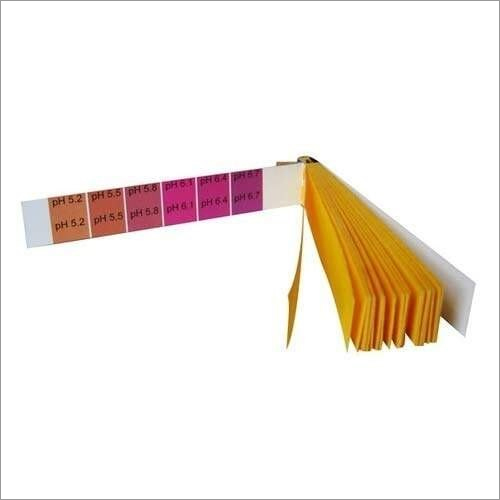
Tell us about your requirement

Price:
Quantity
Select Unit
- 50
- 100
- 200
- 250
- 500
- 1000+
Additional detail
Mobile number
Email


ANGEL CHEMICALS PRIVATE LIMITED
GST : 24AAVCA9917G1Z7
Contact Details

- AATMIYA BROOKFIELDZ, 29, UNTIYA, KAJAPUR, UNTIYA KAJAPUR,Vadodara - 391243, Gujarat, India
- Phone :08045478213

- Mr. Nitin (Director)
- Mobile :08045478213
- Send Inquiry
 Send Inquiry
Video


|


 Send Inquiry
 Send SMS
 Call Me Free
ANGEL CHEMICALS PRIVATE LIMITED
All Rights Reserved.(Terms of Use)
Developed and Managed by Infocom Network Private Limited.
Developed and Managed by Infocom Network Private Limited.

